
The Global Malaise Program makes arthropod sampling easy with standardized sampling kits and protocols provided by CBG. Set up your trap, change your collection bottle once a week for 6 months to a year, store your samples in a freezer, then ship them back to CBG for analysis.
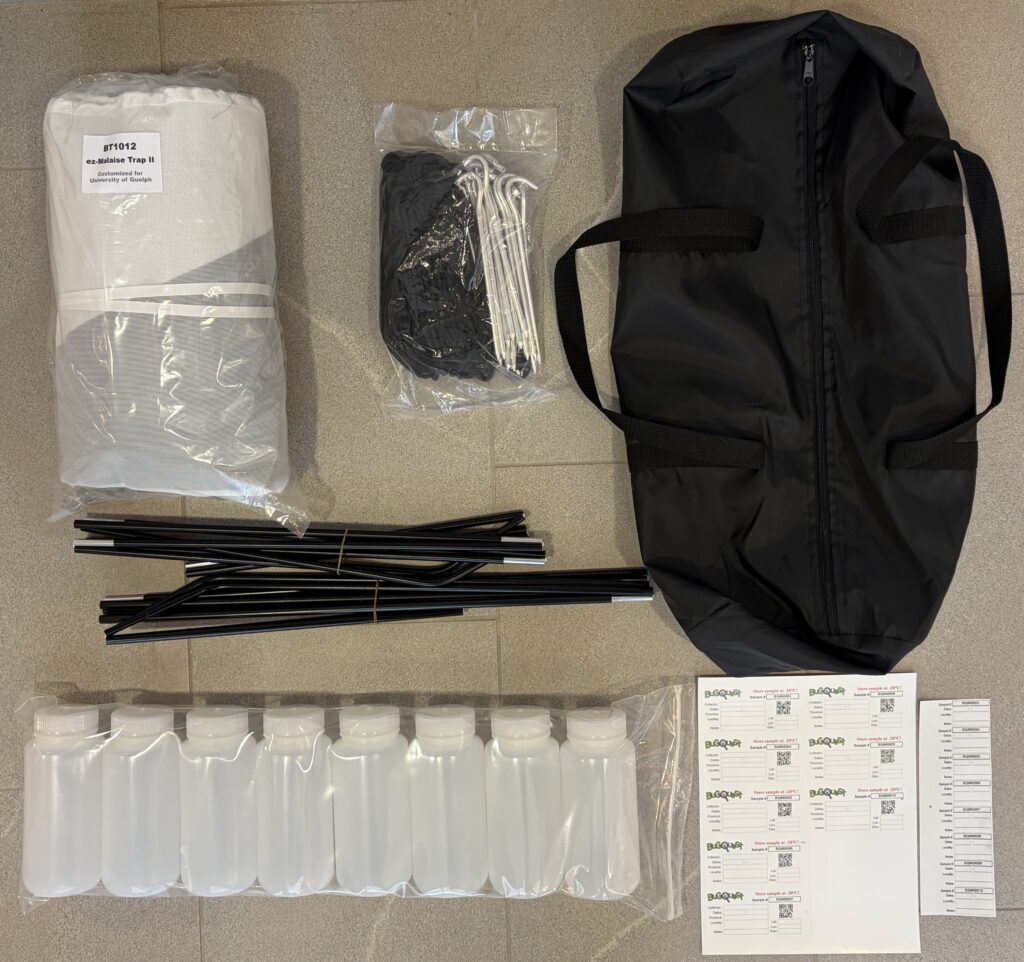
Example sampling kit from BugQuest project
CBG provides a standardized kit with everything needed to run your trap:
You’ll supply 95% ethanol, freezer storage and shipping materials.
[See the full list on Participate]
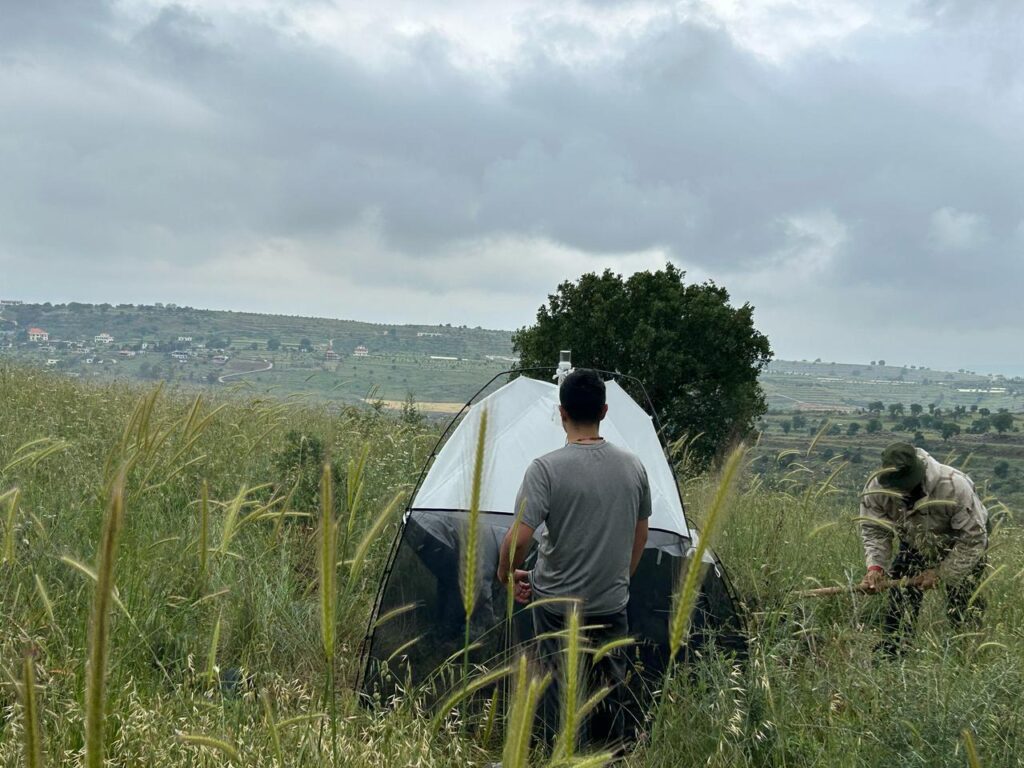
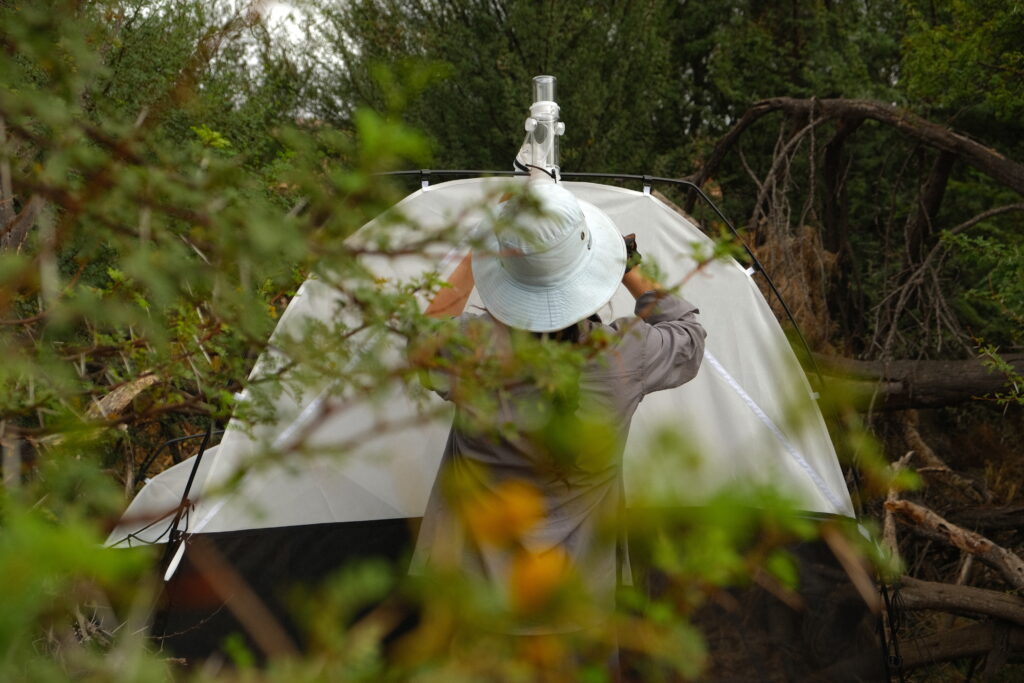
Choose a site that’s safe and practical to visit every week, ideally on flat ground without dense vegetation. Before deploying, get landowner permission and any collection permits. Check now which export permits you’ll need at the end, as some countries take several weeks to issue them. Then follow the SOP and setup video to deploy your trap.
Visit your trap once a week to swap the full collection bottle for a fresh one filled with 95% ethanol (no substitutions), and record it on your log sheet [or in TrapTracker]. Sampling typically runs 6 months to a year: year-round in the tropics, or the full insect flight season in temperate regions. Samples are transferred into sealed bags and stored in a freezer until shipping. The SOP covers each step in detail.
At the end of sampling, take down your trap and email info@globalmalaise.org with your completed log sheet, the number of samples, and your export permits. We’ll help arrange shipping following IATA guidelines. We encourage participants to cover shipping costs where possible; CBG-funded shipping may be available with prior approval. First-time participants may be asked to send a small test shipment of 20–30 samples first.
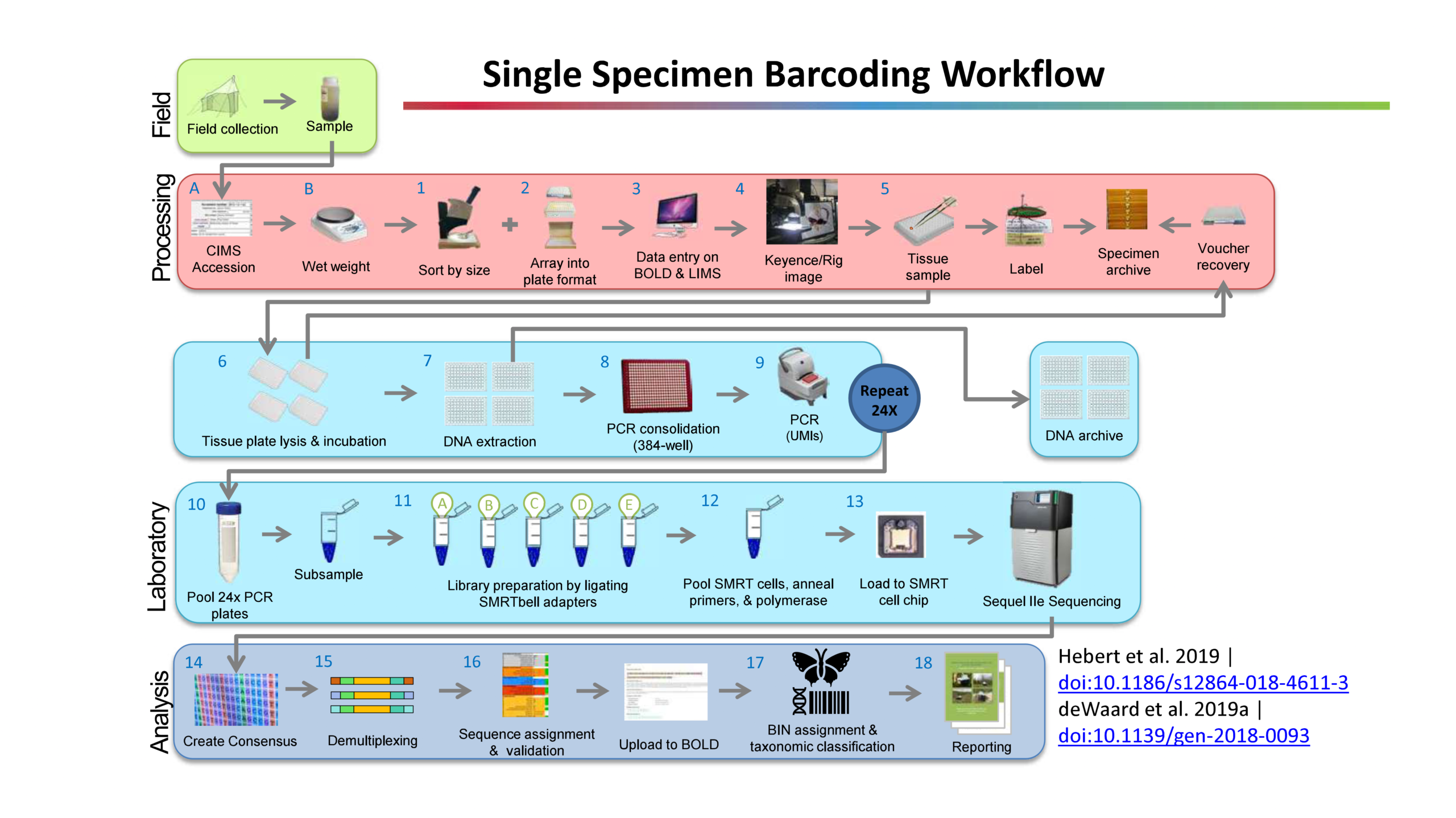
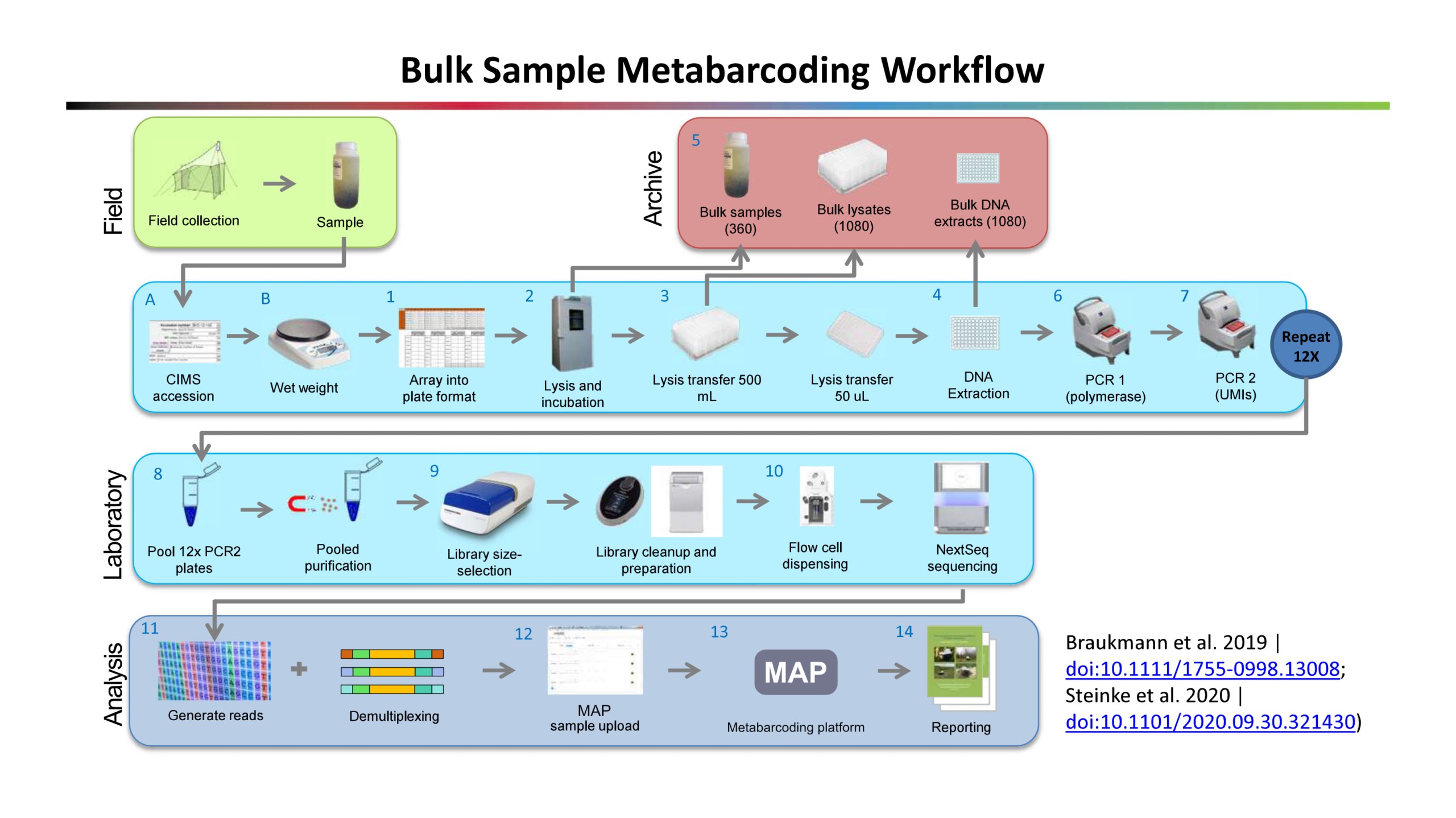
At CBG, samples are logged, weighed, and processed in one of two ways:
Single specimen barcoding – individual specimens are sorted, imaged, and sequenced. Each sequence is assigned a Barcode Index Number (BIN) on the Barcode of Life Data System (BOLD).
Metabarcoding – the whole sample is sequenced at once. This is typically used where a reference library already exists.
Turnaround times vary with the size of your project and our processing queue at the time. Single specimen barcoding results are uploaded to the Barcode of Life Data System (BOLD), and metabarcoding results can be emailed to you on request. Site reports are also available on request. All data is released in accordance with your Biological Material Transfer Agreement (BMTA) and our Data Release Policy.